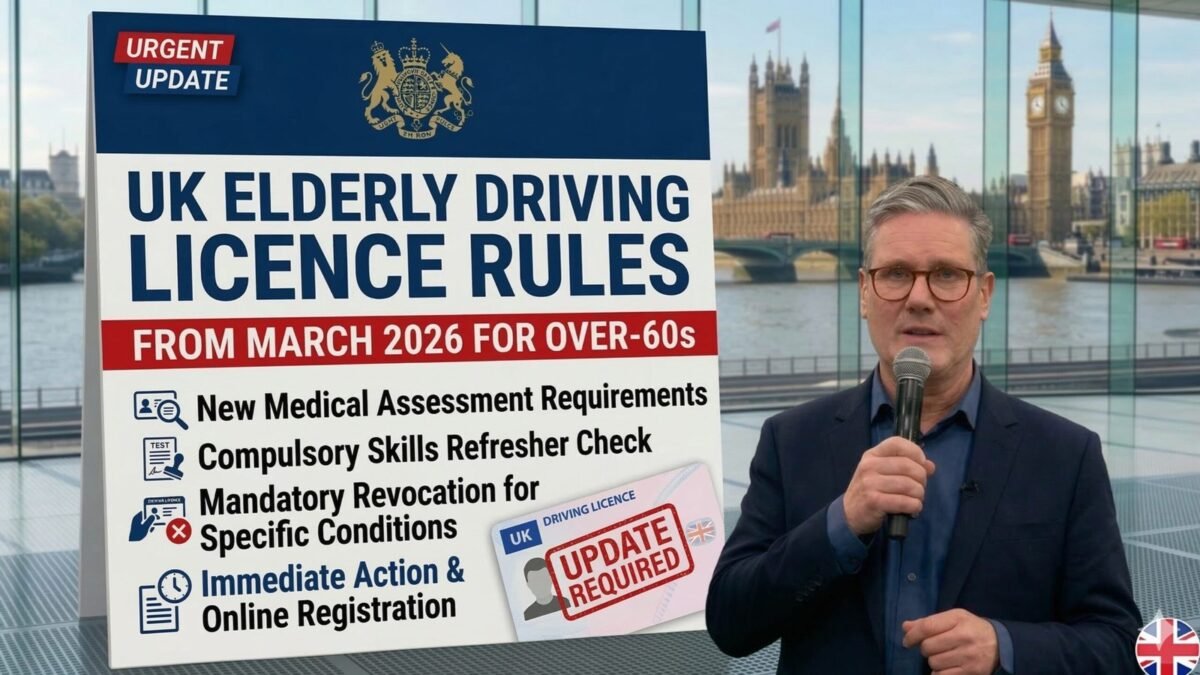
In the United Kingdom, a driving licence represents far more than just a document—it’s essential for maintaining independence, attending social events, and handling daily tasks. With 2026 approaching, the Driver and Vehicle Licensing Agency (DVLA) is implementing key updates aimed at enhancing road safety for the increasing population of older drivers. If you’re over 60 or approaching that milestone, understanding these UK elderly driving licence rules from March 2026 is vital to avoid any disruptions to your driving privileges.
These changes focus on structured renewals, health verifications, and compliance measures rather than age-based restrictions. This comprehensive guide outlines the upcoming requirements, renewal processes, and practical tips to help you prepare effectively and continue driving safely.



Navigating the Age 70 Renewal Milestone
Turning 70 triggers a significant change in how DVLA driving licences are handled. For drivers under 70, renewals typically occur every 10 years mainly for photo updates, but at 70, the licence expires completely, requiring a full renewal application.
Importantly, this doesn’t mean an end to driving. You can reapply and keep motoring, but starting March 2026, over-70s will need to renew every three years to ensure ongoing fitness. If you’re in your 60s, start collecting necessary health information now to make the process seamless when your 70th birthday arrives.
Essential Steps for Renewal
The renewal process is straightforward but requires attention to detail.
- Submit your application online through the official DVLA website or via the D46P postal form.
- Provide a self-declaration of your fitness to drive, meeting vision standards and other criteria.
- Include the required fee and any supporting medical documents if needed.
Thanks to 2026 improvements, processing times are expected to be shorter, but it’s wise to apply early to prevent any gaps in your licence validity.
Prioritizing Mandatory Eyesight Checks
The Department for Transport (DfT) is pushing forward with consultations to make eyesight tests compulsory for older drivers. Previously, a simple self-declaration—confirming you can read a number plate from 20 meters—was sufficient.
However, safety experts are advocating for stricter measures. From early 2026, those over 70 might require certified proof from an optician. The DVLA already requests evidence for any vision concerns, so regular eye exams are a must for elderly drivers to comply with DVLA eyesight standards.
Failing to meet these could block your renewal. Make annual optician visits a routine part of your health maintenance to stay ahead.
Switching to Digital Renewals for Speed and Convenience
The DVLA‘s digital transformation in 2026 targets previous delays in processing. Online renewals for over-70s are projected to take just five days, compared to three weeks for paper applications.
While postal options remain, they’re less efficient. For over-60s less comfortable with technology, resources like GOV.UK Verify offer secure access, and family assistance can simplify setup.
- Securely upload all required documents through the portal.
- Monitor your application’s progress in real time.
- Eliminate risks associated with mail loss or postal delays.
Adopting these tools is especially beneficial as the ageing population increases renewal demands, ensuring you remain mobile without interruption.
Stricter Rules on Disclosing Medical Conditions
Every driver must inform the DVLA of health issues that could affect safe driving, with heightened checks for seniors in 2026. Not reporting can lead to fines up to £1,000 or invalidated insurance after an incident.
Frequently reportable conditions for older adults include:
- Diabetes managed with insulin.
- Parkinson’s disease or cardiovascular problems.
- Early signs of dementia or other cognitive issues.
Full transparency is key—the DVLA reviews cases individually and often permits driving with specific restrictions or reviews.
Leveraging Section 88 for Uninterrupted Driving
While waiting for your renewed licence, Section 88 of the Road Traffic Act 1988 provides a crucial allowance. It permits continued driving if you’ve applied, your GP hasn’t advised against it, and you held a valid licence before.
This provision is particularly helpful in 2026 with high volumes from baby boomers renewing. Always carry proof of your application to avoid issues.
It acts as a safety net, bridging any processing delays without forcing you off the road.
The Critical Role of GP Consultations
Your general practitioner (GP) plays a pivotal part in DVLA assessments. New 2026 guidelines provide doctors with enhanced tools to evaluate driving fitness in older patients.
Be open during appointments—discuss any changes honestly. GPs can suggest vehicle modifications like automatic transmissions or specialized mirrors to support prolonged safe driving.
Honesty leads to personalized advice rather than blanket prohibitions.
Proactive Mature Driver Assessments
Organizations like IAM RoadSmart and RoSPA offer voluntary assessments gaining traction among 60+ drivers. These aren’t formal tests but practical refreshers on essential skills.
They cover areas like roundabout handling and motorway driving, providing actionable feedback.
- Results are confidential and not reported to authorities.
- They enhance insurer trust, potentially reducing premiums.
- Perfect for rebuilding confidence on modern roads.
Optimizing Insurance for Over-60s Drivers
Insurance markets in 2026 are competitive for seniors, emphasizing data-driven policies. Telematics trackers, popular with younger drivers, now prove safe habits for older ones too.
Those driving short distances during daylight hours can benefit from pay-as-you-go plans. Shopping around, combined with assessments and no-claims records, keeps costs down amid rising expenses.
Maintaining Grandfather Rights and Categories
Drivers who passed tests before 1997 enjoy grandfather rights for categories like C1 or D1. Retaining them post-70 requires thorough D4 medical exams during renewals.
If you no longer need certain entitlements, surrendering them simplifies the process. Review your usage yearly to decide wisely.
Addressing Family and Third-Party Reports
From 2026, anonymous reports from family or others about safety concerns are easier to submit. Treat these as opportunities for reflection rather than threats.
Proactively reduce mileage or explore alternatives like public transport to maintain independence gracefully.
Future-Proofing Your Driving Independence
As life expectancies rise, 2026 UK elderly driving rules strike a balance between personal freedom and collective safety. They recognize that many seniors remain capable and active behind the wheel.
Stay ahead by keeping records current, scheduling yearly eye tests, and responding promptly to DVLA communications. Incorporate regular assessments to drive confidently well into retirement.
Armed with this knowledge, you can protect your mobility while contributing to safer roads for everyone. Proactive steps today ensure worry-free journeys tomorrow.