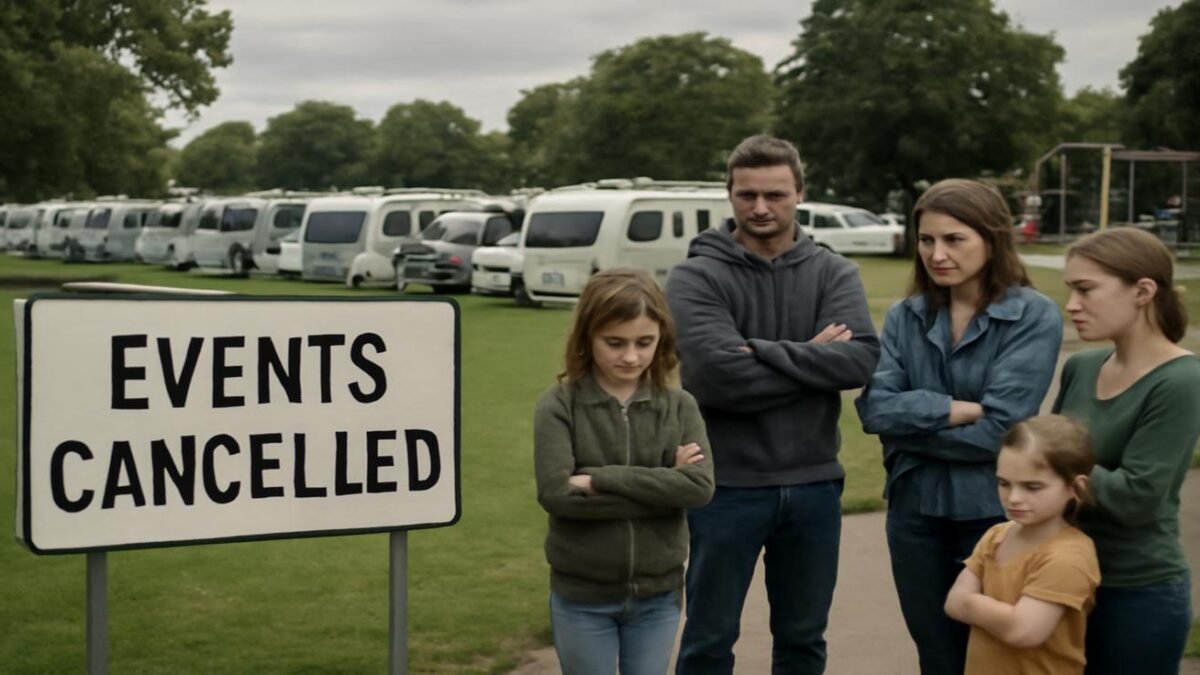
As dawn broke over Fernbrook Family Park, a silent procession of caravans rolled in without warning, turning the peaceful parking area into an unexpected encampment. Families eager for a day of bouncy castles, live entertainment, and animal interactions arrived to find everything shut down. This sudden arrival by a group of Travellers not only halted the Summer Fun Day but also sparked vital discussions on public space usage, community tensions, and the need for better facilities.
The Sudden Takeover That Disrupted Family Plans



Early morning visitors, including dog walkers, were the first to notice the caravans slipping past the entrance. Within hours, more vehicles arrived, forming a tight cluster on the gravel lot typically buzzing with family minivans and ice cream trucks. By mid-morning, the park’s joyful atmosphere vanished, replaced by confusion and cancellation signs plastered everywhere.
Parents with wide-eyed children read notices explaining the shutdown due to unforeseen issues. Social media quickly lit up with shared images of empty event spaces and disappointed faces. Yet, amid the frustration, signs of normalcy peeked from the caravans—unfolding chairs, drying laundry, and the aroma of cooking meals.
The playground, once festooned with colorful posters for rides and petting zoos, now stood silent behind barriers. Travellers had repurposed the area, highlighting a clash between planned festivities and nomadic necessities.
- Immediate effects: Event vendors packed up unused stalls, rides stayed grounded, and food trucks idled without customers.
- Mood transformation: Excitement turned to curiosity mixed with unease as locals gathered to watch.
- Human touches: Children on scooters darted around, grills sizzled with breakfast, evoking a makeshift community vibe.
Who Are the Travellers and Why Here?
Travellers represent a long-standing nomadic tradition, often facing misconceptions and limited options for safe stops. This group, having moved from previous temporary sites, chose Fernbrook Family Park for its open spaces, restrooms, and water access. Their pattern of short stays is driven by local bylaws and a chronic lack of designated transit areas.
Daily Life in the Encampment
Inside the semi-circle of caravans, life unfolded routinely. An elderly woman enjoyed her morning tea while supervising grandchildren kicking a ball. Families chatted about future routes, squeezed by increasing restrictions on roadside parking.
One parent explained to a park official how recent evictions from nearby fields left them with few choices. Public parks like this one fill the gap, but they aren’t equipped for prolonged camping, leading to inevitable conflicts.
Shortages Fueling the Issue
Without enough official pitches, groups resort to green spaces, car parks, and verges. This cycle pits family outings against basic human needs for shelter and stability, underscoring broader societal challenges.
Local Reactions: From Frustration to Reflection
Residents expressed mixed feelings—some grumbled over missed treats like churros and hot drinks, others acknowledged the scarcity of alternatives. “The council’s promised site is still just talk,” one regular visitor sighed, watching from the sidelines.
The park, a hub for birthdays, skating, and picnics, suddenly became a testing ground for inclusivity. Tensions rose subtly, but no major clashes occurred as authorities stepped in with barriers and calm oversight.
A volunteer organizer mourned the absent alpaca petting zoo, her focus on the children’s letdown. Traders counted losses from unsold goods, while rangers monitored with professional restraint.
A Timeline of the Day’s Events
The disruption unfolded predictably yet poignantly throughout the day. Here’s how it progressed:
- 7-9 AM: Caravans arrive quietly; first locals notice and speculate.
- 9-11 AM: Official cancellation posted; online buzz and family disappointment peak.
- 11 AM-2 PM: Crowds form; Traveller routines set in, tentative interactions begin.
- 2-5 PM: Council negotiations ramp up; weariness settles over the site.
- After 5 PM: Atmosphere calms; children unite in play, discussions shift online.
Moments of Unexpected Unity
As the afternoon wore on, dismantled tents left flattened patches on the grass. A lone musician played on the empty bandstand, his notes drifting to indifferent birds. Meanwhile, Traveller youth kicked off a spontaneous soccer match, drawing in local kids with cheers of “Over here!”
Adults kept distance, but the playground fostered natural bridges. Police maintained a low profile, prioritizing talks over force, allowing humanity to shine through the standoff.
Negotiations, Challenges, and Broader Implications
Council workers in high-visibility gear huddled near the café, phones in hand, as discussions dragged. A Traveller father fixed his caravan steps nearby, while a vendor sorted leftover stock—scenes of everyday resilience amid red tape.
The park embodied a shared contested space: a haven for day-trippers clashing with mobile homes seeking respite. Nature carried on indifferently, with wildlife foraging as clouds passed overhead.
This event raises key questions about public areas. Who has priority—booked events or urgent needs? How can communities balance access without exclusion?
Moving Forward: Solutions for Harmony in Public Spaces
Once the Travellers move on, Fernbrook Family Park will recover—grass will regrow, events reschedule. However, recurring issues like site shortages perpetuate these disruptions, costing locals and nomads alike.
Proactive steps could help: faster development of transit pitches, welfare support during stays, and community education to dispel myths. Clear policies and dialogue reduce friction, allowing parks to serve everyone.
In essence, this wasn’t merely an event cancellation; it was a mirror to societal divides. Family parks must evolve to accommodate diverse needs, fostering empathy over enmity. As the children demonstrated through shared games, unity is possible—now policies must catch up, ensuring room for all under one sky.